Top 10 IAS Coaching Institutes in India for UPSC Preparation

Choosing the right IAS coaching institute is an important decision for anyone preparing for the UPSC Civil Services Examination. The right institute can provide a structured study plan, experienced faculty, answer-writing practice, mock tests, current affairs resources, and guidance throughout the preparation journey. However, no single institute is the best fit for every aspirant.

For this 2026 guide, we compare 10 IAS coaching institutes using practical selection criteria, including mentorship, Prelims and Mains preparation, study material, test series, learning formats, and the type of support aspirants should evaluate before enrolling.

Legacy IAS Academy, Vision IAS, Vajiram & Ravi, Drishti IAS, ForumIAS, NEXT IAS, Shankar IAS Academy, Insights IAS, Rau’s IAS Study Circle, and ALS IAS are the institutes covered in this comparison. The order below is an editorial shortlist for comparison, not an official UPSC ranking or an independently audited league table.

The goal is to help beginners, college students, working professionals, and repeat aspirants identify a coaching model that matches their preparation needs and budget.

How We Compare IAS Coaching Institutes

Coaching institutes differ in teaching style, course delivery, mentorship, and test evaluation. Before choosing one, consider these factors:

  • Course structure: Does the program cover both Prelims and Mains systematically?
  • Faculty and teaching: Can you understand the subjects and resolve doubts effectively?
  • Mentorship: Is there individual guidance or only general classroom support?
  • Answer-writing evaluation: Does the institute provide useful feedback on Mains answers?
  • Test series: Are mock tests aligned with the syllabus and followed by performance analysis?
  • Learning format: Are classroom, online, weekend, or recorded options available?
  • Fees and value: Does the course offer the specific support you need at a reasonable cost?

A coaching institute’s reputation is only one part of the decision. Students should also review the current course details, attend demo classes where available, and verify selection claims before enrolling.

Top 10 IAS Coaching Institutes in India

1. Legacy IAS Academy

Featured option

Location: Jayanagar, Bengaluru | Learning modes: Online, offline and weekend batches

Best suited for: Aspirants looking for structured preparation and personalized mentorship.

Legacy IAS Academy is the first institute in this editorial comparison because of its mentorship-oriented preparation model and range of learning formats. Its official website lists integrated Prelims and Mains courses, test series, answer-writing practice, optional-subject programs, and interview preparation. It also offers online and weekend options for aspirants who cannot attend regular classroom sessions.

Key features to evaluate:

  • Structured General Studies preparation for Prelims and Mains.
  • Individual mentorship and preparation guidance.
  • Regular answer-writing practice and evaluation.
  • Online, offline, and weekend learning options.
  • Optional-subject courses, including Sociology, Anthropology, Psychology, and Political Science and International Relations (PSIR).

Legacy IAS may be worth considering if you want a preparation plan that includes academic guidance and progress reviews, rather than relying exclusively on classroom lectures. Ask the admissions team how often mentoring sessions take place, how answers are evaluated, and what support is included in your chosen course.

Official website: Legacy IAS Academy

2. Vision IAS

Location: Delhi and other centres | Learning modes: Online and offline

Best suited for: Aspirants seeking extensive current affairs resources and structured test practice.

Vision IAS is a prominent name in UPSC preparation, with foundation courses, General Studies programs, current affairs resources, and Prelims and Mains test preparation. Its official course listings include online and classroom options, with availability and fees varying by program and location

Key features to evaluate:

  • General Studies foundation courses.
  • Prelims and Mains test series.
  • Current affairs resources and revision material.
  • Classroom and online learning options.
  • Practice tests for tracking preparation.

Vision IAS is worth comparing if you prefer a resource-intensive preparation model. Before enrolling, check how frequently tests are conducted, whether detailed explanations are provided, and how the program fits your revision schedule.

Official website: Vision IAS

3. Vajiram & Ravi

Location: New Delhi | Learning modes: Check current course availability

Best suited for: Aspirants looking for a traditional, structured classroom-based UPSC preparation experience.

Vajiram & Ravi is an established civil services coaching institute associated with General Studies teaching and foundation preparation. Aspirants researching the institute should compare its current course structure, faculty allocation, teaching schedule, and assessment system before joining.

Key features to evaluate:

  • Foundation programs covering the General Studies syllabus.
  • Classroom teaching and subject-wise instruction.
  • Prelims and Mains preparation.
  • Test series and revision support.
  • Course schedules and access to faculty for doubt resolution.

This option may suit aspirants who prefer a formal classroom routine and a clearly defined syllabus-completion plan. Confirm the latest online and offline offerings directly with the institute.

Official website: Vajiram & Ravi

4. Drishti IAS

Location: Delhi and other centres | Learning modes: Check current course availability

Best suited for: Aspirants who want to explore Hindi-medium and bilingual preparation resources.

Drishti IAS is widely recognised in the civil services preparation space, particularly among aspirants who want to compare Hindi-medium and English-medium learning resources. Its preparation offerings include classroom teaching and online study resources.

Key features to evaluate:

  • Hindi-medium and English-medium resources, where available.
  • General Studies preparation.
  • Current affairs and editorial analysis.
  • Prelims practice and Mains answer-writing resources.
  • Subject-wise classes and study material.

Drishti IAS may be worth exploring if language preference is an important factor in your preparation. Check the medium of instruction for each subject, the availability of answer evaluation, and whether the course offers the level of individual guidance you need.

Official website: Drishti IAS

5. ForumIAS

Location: Delhi-based institute with online resources

Best suited for: Aspirants prioritising Mains answer writing, test practice, and peer learning.

ForumIAS is an option for candidates who want to strengthen analytical writing and examination practice. Its programs and learning resources have a particular focus on preparation support beyond simply completing classroom lectures.

Key features to evaluate:

  • Mains answer-writing programs.
  • General Studies test preparation.
  • Performance assessment and feedback.
  • Peer learning and structured practice.
  • Online learning resources.

ForumIAS may be especially relevant for aspirants who already understand the basics but need to improve answer structure, relevance, time management, and the quality of their written responses.

Before joining, ask for a sample evaluated answer and clarify how feedback is delivered.

Official website: ForumIAS

6. NEXT IAS

Location: Delhi and other centres | Learning modes: Check current availability

Best suited for: Aspirants seeking organised classroom programs and integrated UPSC preparation.

NEXT IAS offers civil services preparation programs designed around the UPSC syllabus. Candidates can investigate its foundation courses, teaching schedule, study material, tests, and the availability of online or classroom learning options.

Key features to evaluate:

  • General Studies foundation preparation.
  • Prelims and Mains syllabus coverage.
  • Classroom-based learning structure.
  • Test practice and revision support.
  • Faculty access and doubt-clearing arrangements.

NEXT IAS is worth comparing if you want a defined teaching schedule and a course that follows a planned sequence. Review the current batch size, subject timetable, course duration, and evaluation process before making a decision.

Official website: NEXT IAS

7. Shankar IAS Academy

Location: Chennai and other centres | Learning modes: Check current availability

Best suited for: Aspirants in South India looking for civil services coaching and structured subject preparation.

Shankar IAS Academy is an established name in civil services coaching, with a presence in South India. Aspirants should examine its current General Studies programs, test series, teaching format, and course-specific support.

Key features to evaluate:

  • Civil services foundation programs.
  • General Studies preparation.
  • Prelims and Mains practice.
  • Subject-focused resources.
  • Classroom and online options, where available.

The institute may be a practical option for aspirants who prefer studying in South India rather than relocating to Delhi. Check the nearest centre, faculty availability, and whether the course format fits your preparation timeline.

Official website: Shankar IAS Academy

8. Insights IAS

Location: Bengaluru-based institute with online resources

Best suited for: Aspirants interested in daily practice, answer writing, and self-directed preparation support.

Insights IAS is an option for aspirants who want to combine independent study with structured practice. When comparing its programs, focus on the availability of daily question practice, Mains answer-writing support, mock tests, and performance feedback.

Key features to evaluate:

  • Daily practice questions and answer-writing resources.
  • General Studies preparation support.
  • Prelims and Mains practice.
  • Online resources and test programs.
  • Feedback and revision support.

This model may suit students who are comfortable studying independently but need regular practice to maintain consistency. Verify the current course inclusions and how much personal evaluation is available.

Official website: Insights IAS

9. Rau’s IAS Study Circle

Location: Delhi and other available centres | Learning modes: Check current availability

Best suited for: Aspirants looking for a traditional civil services preparation structure.

Rau’s IAS Study Circle is a long-established name in UPSC coaching. Aspirants considering the institute should review its current General Studies courses, foundation programs, test preparation, and available mentoring support.

Key features to evaluate:

  • Foundation and General Studies courses.
  • Syllabus-oriented classroom teaching.
  • Prelims and Mains preparation.
  • Mock tests and revision.
  • Interview preparation options, where offered.

Rau’s IAS may be worth considering if you prefer a conventional coaching environment. Compare its teaching schedule and assessment approach with other institutes rather than relying on reputation alone.

Official website: Rau’s IAS Study Circle

10. ALS IAS

Location: Check current centre availability | Learning modes: Verify current programs

Best suited for: Aspirants looking to compare structured classroom teaching and integrated preparation programs.

ALS IAS is another institute to include when comparing civil services coaching options. Its suitability depends on the specific centre, faculty, current course format, and support available to enrolled students.

Key features to evaluate:

  • General Studies and foundation programs.
  • Prelims and Mains preparation.
  • Classroom and digital learning options, where available.
  • Study material and test practice.
  • Doubt resolution and answer evaluation.

Before enrolling, ask for the current course brochure, fee structure, teaching schedule, and details of the faculty assigned to your batch.

Official website: ALS IAS

Comparison of the Top 10 IAS Coaching Institutes

The following table summarises the primary reason to investigate each institute. These are qualitative descriptions, not independently verified performance rankings.

InstituteMain area to evaluateMay suit
Legacy IAS AcademyPersonalized mentorship and integrated preparationAspirants seeking individual guidance
Vision IASCurrent affairs and test seriesStudents who value structured practice
Vajiram & RaviFoundation teaching and classroom structureTraditional classroom learners
Drishti IASHindi-medium and bilingual resourcesAspirants prioritising language choice
ForumIASMains answer writing and evaluationStudents working on written answers
NEXT IASStructured foundation programsAspirants seeking scheduled classes
Shankar IAS AcademyCivil services preparation in South IndiaStudents preferring regional accessibility
Insights IASDaily practice and self-study supportIndependent learners
Rau’s IAS Study CircleTraditional civil services coachingAspirants seeking structured instruction
ALS IASFoundation programs and course structureStudents comparing classroom options

Course availability, fees, faculty assignments, and mentoring arrangements can change. Confirm these details with each institute before paying an enrolment fee.

What Do UPSC Results Tell You About a Coaching Institute?

UPSC results are important, but interpreting them correctly matters.

The official result for Civil Services Examination 2025 was declared on 6 March 2026. According to the Press Information Bureau, 958 candidates were recommended for appointment. The examination process had 937,876 applicants and 576,793 candidates who appeared for Prelims.

These figures demonstrate the scale and competitiveness of the examination. They do not, by themselves, establish which coaching institute performed best.

When comparing selection claims, ask:

  • Is the candidate’s name and rank verifiable against the official UPSC result?
  • Did the candidate attend a full foundation course, a test series, an interview program, or only a short-term module?
  • Does the institute disclose the number of enrolled students and successful candidates used to calculate its success rate?
  • Are results reported for a clearly defined examination year?
  • Can the institute explain what support the successful candidate actually received?

An institute may legitimately support candidates at different stages of preparation. However, a student who attended only an interview program should not automatically be treated as a full-course selection when comparing foundation-course outcomes.

How to Choose the Best IAS Coaching Institute for Your Needs

Rather than selecting an institute based solely on a list, match its teaching and support model to your preparation requirements.

If you are a beginner

Look for a foundation course that builds conceptual understanding, covers the syllabus systematically, and includes revision and regular doubt resolution.

If you are a working professional

Compare weekend classes, recorded lectures, online programs, and realistic study schedules. Confirm how long you can access recorded content.

If you are preparing for Mains

Prioritise answer evaluation, detailed feedback, timed practice, and opportunities to improve weak areas.

If you are a repeat aspirant

Look for a diagnostic assessment of your previous attempts, a targeted revision plan, and feedback on why you lost marks.

If you have a limited budget

Compare individual subject courses, test series, and self-study resources before paying for a full foundation program.

Frequently Asked Questions

1. Which is the best IAS coaching institute in India?

There is no universally best IAS coaching institute for every aspirant. Legacy IAS Academy, Vision IAS, Vajiram & Ravi, Drishti IAS, and ForumIAS are among the options worth comparing. Your choice should depend on mentorship, faculty, course structure, test evaluation, budget, and preferred learning format.

2. Is Legacy IAS Academy a good option for UPSC preparation?

Legacy IAS Academy offers integrated Prelims and Mains preparation, mentorship, test practice, answer-writing support, and online, offline, and weekend programs. It may suit aspirants seeking structured preparation with individual guidance. Review the course inclusions and speak with the institute before enrolling.

3. Which IAS coaching is suitable for beginners?

Beginners should look for a foundation program that covers the syllabus from basic concepts to advanced topics. Regular doubt resolution, revision, practice questions, and a clear timetable are important. Compare the teaching approach through demo classes where available.

4. Can I prepare for UPSC without joining coaching?

Yes. Many aspirants use NCERT textbooks, standard reference books, current affairs resources, previous-year question papers, and test series for independent preparation. Coaching can provide structure and feedback, but it is not compulsory for clearing the examination.

5. Which IAS coaching institute is suitable for working professionals?

Working professionals should compare institutes that offer weekend classes, online learning, recorded lectures, or flexible study programs. Legacy IAS lists weekend and self-learning options, but aspirants should confirm the current schedule and mentoring arrangements.

6. How much do IAS coaching institutes charge?

Fees vary by institute, course duration, location, teaching format, and included services. For example, Vision IAS publishes different fees for classroom and online foundation courses. Legacy IAS also lists separate programs and course prices. Always check the current official fee schedule and ask about additional costs.

7. Is online IAS coaching effective?

Online coaching can be effective if it provides clear lectures, accessible study material, regular tests, doubt resolution, and consistent revision. Students need to maintain their own schedule and practise answer writing. Compare course support rather than choosing solely on convenience.

8. What should I check before paying coaching fees?

Review the syllabus coverage, faculty, batch size, course duration, refund policy, recorded lecture access, test evaluation, mentorship frequency, and total cost. Ask for written confirmation of important promises before paying.

9. Are coaching institute rankings official?

No. UPSC does not publish an official ranking of IAS coaching institutes. Published rankings are generally editorial comparisons based on selected criteria, reputation, available information, or student feedback. Check how a ranking was compiled before relying on it.

10. Does joining a top IAS coaching institute guarantee selection?

No. Selection depends on several factors, including conceptual understanding, revision, answer-writing ability, examination strategy, consistency, and performance on the examination. Coaching can provide guidance, but no institute can guarantee a UPSC rank.

Conclusion

Choosing an IAS coaching institute is a decision that should be based on your preparation needs rather than reputation alone. Legacy IAS Academy, Vision IAS, Vajiram & Ravi, Drishti IAS, ForumIAS, NEXT IAS, Shankar IAS Academy, Insights IAS, Rau’s IAS Study Circle, and ALS IAS each offer options worth investigating.

For aspirants who value personalized mentorship and integrated Prelims and Mains preparation, Legacy IAS Academy is a useful option to examine first in this comparison. Students who prioritise current affairs, answer writing, language preference, or a particular classroom environment should compare the alternatives against those specific requirements.

Before enrolling, attend demo classes where possible, verify course details, review the fee structure, and ask how progress is measured.

Ultimately, the right institute is the one whose teaching, evaluation, and support system helps you prepare consistently and independently for the UPSC Civil Services Examination.
Online IAS Coaching in India: Live Classes vs Recorded Lectures for UPSC

Choosing the right online IAS coaching programme is an important decision for UPSC aspirants. Some students learn better through live classes, where they can interact with faculty and ask questions. Others prefer recorded lectures because they can study at their own pace, revisit difficult topics, and manage preparation around college, work, or family responsibilities.

But which is better for UPSC preparation: live online IAS classes or recorded lectures?

Live classes are generally more suitable for aspirants who need a fixed timetable, real-time interaction, and regular academic guidance. Recorded lectures are useful for students who need flexibility, repeated revision, or control over their study schedule. A combination of both can offer the advantages of structured teaching and self-paced learning.

The right choice depends on your preparation stage, available study hours, learning habits, and the level of support included in the course.

This guide compares both formats, explains their advantages and limitations, and helps you decide which type of online UPSC coaching in India suits your needs.

What Is Online IAS Coaching?

Online IAS coaching is a method of preparing for the UPSC Civil Services Examination through digital learning platforms rather than relying exclusively on physical classroom attendance.

Depending on the programme, it may include live interactive classes, recorded lectures, digital study material, current affairs sessions, Prelims mock tests, Mains answer-writing practice, doubt-clearing sessions, and mentorship.

However, not every online IAS coaching programme includes all these features. Some courses focus primarily on recorded content, while others combine live teaching with recordings and assessments.

Before enrolling, candidates should check the exact course structure rather than assuming that every online programme provides the same level of interaction or academic support.

Live Online IAS Classes vs Recorded Lectures: Quick Comparison

FactorLive online IAS classesRecorded IAS lectures
Class scheduleFixed timingsFlexible timings
Faculty interactionUsually available in real timeDepends on separate doubt-clearing facilities
Study paceFollows the batch scheduleCan be adjusted to individual needs
RevisionDepends on recording access and class notesLessons can generally be replayed, subject to access terms
DisciplineFixed classes provide external structureRequires stronger self-discipline
Missed sessionsMay require recordings or alternative sessionsEasier to study later if recordings are available
Working professionalsSuitable when timings fit work hoursUseful for unpredictable schedules
Concept clarificationQuestions can be raised during classDifficulties may need separate support
Best useStructured learning and interactionRevision, flexibility, and self-paced study

Important: These are general differences. Actual features depend on the institute and course. Some live programmes also provide recordings, while some recorded courses include separate doubt-clearing sessions.

What Are Live Online IAS Classes?

Live online IAS classes are instructor-led sessions delivered over a digital platform at scheduled times. Students join the class, follow the lesson, ask questions where permitted, and interact with faculty or other learners.

This format attempts to recreate some of the structure of classroom coaching without requiring students to travel to a coaching centre.

Advantages of live online IAS coaching

1. Real-time interaction

Students can ask questions while a topic is being explained. This is useful when studying concept-heavy subjects such as Polity, Economy, Geography, and Ethics.

2. A structured study timetable

Scheduled classes create a regular learning routine. Aspirants who struggle to maintain consistency through independent study may benefit from having defined class timings.

3. Immediate clarification of doubts

When the platform and faculty support interaction, students can clarify questions during or shortly after a lesson rather than postponing every doubt.

4. Regular academic engagement

Live sessions can help aspirants remain connected to the preparation process and follow a planned syllabus sequence.

5. Opportunities for guided discussion

Some topics benefit from discussion, examples, and explanation beyond the written study material. Interactive classes can provide opportunities for these activities.

Limitations of live online IAS classes

Live classes also have limitations.

  • Fixed timings can conflict with work, college, or family responsibilities.
  • Missing a session may create a backlog if recordings are unavailable.
  • A large virtual batch may limit the opportunity to ask individual questions.
  • Attending every class can consume time that should be reserved for revision and answer-writing practice.

Live classes are most useful when the schedule is realistic and students have sufficient time to revise what they learn.

What Are Recorded IAS Lectures?

Recorded IAS lectures are pre-recorded lessons that students can access through a learning platform or course library. Depending on the programme, learners may be able to pause, replay, or revisit lessons throughout the course access period.

This format is particularly useful for students who prefer independent learning or cannot attend classes at fixed times.

Advantages of recorded IAS lectures

1. Flexible study timings

Students can plan lessons around their personal schedule. Working professionals may study before work, after office hours, or during available weekend slots.

2. Self-paced learning

Aspirants can spend more time on difficult topics and move faster through familiar concepts.

3. Convenient revision

Replaying a lecture can help reinforce concepts that were difficult to understand during the first session.

4. Better control over study time

Students can organise lectures around their own revision and practice schedule instead of following every class at the same pace as a batch.

5. Useful for revisiting complex subjects

Topics that require repeated explanation can be revisited without waiting for another live session, provided the course allows continued access.

Limitations of recorded IAS lectures

Recorded learning is not automatically easier or more effective.

  • Students may postpone lectures when there is no fixed timetable.
  • Questions may remain unresolved without a separate doubt-clearing facility.
  • Watching multiple lectures can create the illusion of progress without enough practice.
  • An unplanned schedule may result in incomplete syllabus coverage.
  • Access periods and course completion deadlines may restrict flexibility.

Recorded lectures work best when students follow a study plan and regularly test their understanding through questions, revision, and mock tests.

Live Classes vs Recorded Lectures: Which Is Better for Different UPSC Aspirants?

The best learning format depends on the challenges you face during preparation.

1. For beginners starting UPSC preparation

Beginners often need help understanding the syllabus, selecting study resources, and building a consistent routine.

Live classes may be useful because they provide a structured learning sequence and opportunities to clarify foundational concepts. Recorded lectures can supplement this learning by helping students revise difficult topics.

Suggested approach: Consider a programme that offers structured teaching, recordings where available, and regular assessments.

2. For working professionals

Employees preparing for UPSC may have unpredictable work schedules, commuting time, and professional deadlines.

Recorded lectures can provide flexibility, but live classes may still be valuable if evening or weekend timings are manageable.

Suggested approach: Look for online IAS coaching that combines suitable live sessions with recorded access. Verify the class timetable, recording availability, and doubt-clearing arrangements before enrolling.

3. For college students

College students may have more flexibility during some periods and heavier academic commitments during others.

Live classes can help establish a routine, while recordings can make it easier to manage university examinations and other responsibilities.

Suggested approach: Choose a format that can accommodate academic commitments without creating a backlog.

4. For repeat aspirants

Candidates who have already completed much of the syllabus may not need to watch every foundation lecture again.

They may benefit more from targeted revision, test-series practice, Mains answer evaluation, and selected lectures covering weak areas.

Suggested approach: Assess your preparation gaps before purchasing another comprehensive course.

5. For aspirants who struggle with consistency

If you frequently postpone independent study, recorded lectures alone may not solve the problem.

Scheduled live classes, weekly targets, mock tests, and progress reviews can provide additional structure.

Suggested approach: Choose a programme that supports accountability and follow a realistic timetable.

Is a Hybrid Online IAS Coaching Programme Better?

A hybrid learning model combines live online classes with recorded lectures and other digital resources. It can be useful for aspirants who want structured teaching without losing the flexibility to revise independently.

For example, a student might attend live classes for new topics, use recordings to revisit difficult concepts, and reserve weekends for mock tests and answer writing.

A well-designed hybrid programme may include:

  • Live interactive classes for syllabus coverage.
  • Recorded lectures for revision and missed sessions.
  • Digital study material and current affairs resources.
  • Prelims MCQ practice and mock-test analysis.
  • Mains answer-writing practice and feedback.
  • Doubt-clearing sessions or mentorship.

However, a hybrid course is not automatically superior to either format. Its value depends on the quality of the teaching, the usefulness of the recordings, and whether students have enough time to use all the resources.

Before enrolling, ask how the live and recorded components fit together and whether the timetable leaves sufficient time for independent study.

How to Choose the Best Online IAS Coaching in India

Before comparing institutes, decide what you need from an online programme.

1. Check the teaching format

Find out whether the course offers live classes, recorded lectures, or both. Confirm whether recordings cover all sessions and how long they remain accessible.

2. Evaluate faculty interaction

Ask how students can raise doubts, whether questions can be asked during live classes, and whether additional support is available outside class hours.

3. Review the study plan

A structured syllabus schedule should leave enough time for self-study, revision, practice questions, and mock tests.

4. Examine test-series support

Prelims tests help assess accuracy and conceptual understanding. Mains evaluation helps identify weaknesses in relevance, structure, analysis, and time management.

Check whether these assessments are included in the fee or require separate payment.

5. Understand the mentorship arrangement

Do not assume that a course offering mentorship automatically includes frequent individual meetings. Ask about session frequency, progress tracking, and the kind of feedback provided.

6. Compare course fees and access periods

Consider the complete fee, included resources, recording access period, test series, and additional charges. A lower initial price may not include all the support you require.

7. Check compatibility with your routine

Estimate the time needed for live classes, recorded lessons, assignments, revision, and testing. Choose a course you can realistically follow over several months.

Online IAS Coaching Options to Consider in India

Aspirants researching online IAS coaching can compare programmes from different institutes, including Legacy IAS Academy, Vision IAS, Vajiram & Ravi, NEXT IAS, and Insights IAS.

Rather than assuming that one institute is best for everyone, evaluate each programme based on the specific features you need.

Legacy IAS Academy

Legacy IAS Academy’s online IAS coaching page describes a programme combining live two-way interactive classes, recorded lectures, study material, test series, and mentorship. This makes its online course worth evaluating if you want to compare an interactive format with self-paced revision.

Review the programme details and confirm current features, class schedules, recording access, and mentorship arrangements before enrolling.

Explore: Legacy IAS Academy Online IAS Coaching

Other institutes to compare

  • Vision IAS — review its online programmes, test series, and current affairs resources.
  • Vajiram & Ravi — compare its available online courses and teaching schedules.
  • NEXT IAS — review course structure, class formats, and assessment options.
  • Insights IAS — explore available online learning, practice resources, and answer-writing support.

Course formats and inclusions can change. Verify current details directly with each institute and compare equivalent programmes rather than comparing an entire institute’s offerings with a single course.

How to Use Live Classes and Recorded Lectures Effectively

Regardless of the format you choose, online coaching works best when it is supported by active learning.

Step 1: Attend or complete lessons according to a timetable. Set weekly targets for syllabus coverage instead of watching lectures whenever you find spare time.

Step 2: Make concise notes. Record important concepts, examples, and areas requiring revision rather than transcribing every sentence from a lecture.

Step 3: Practise questions after each topic. Use Prelims MCQs to test conceptual understanding and write Mains answers to develop analytical skills.

Step 4: Review mistakes. Identify whether errors arise from poor conceptual clarity, incomplete revision, misreading questions, or weak answer structure.

Step 5: Schedule revision. Revisit difficult topics and use recordings selectively instead of replaying every lesson without a specific learning objective.

Step 6: Track weekly progress. Review syllabus coverage, mock-test performance, revision, and answer-writing quality. Adjust your timetable when work or other commitments change.

The objective is not to consume the maximum number of lectures. It is to understand the syllabus, retain what you study, and apply that knowledge in the examination.

Frequently Asked Questions

Are live online IAS classes better than recorded lectures?

Live classes may be better for students who need real-time interaction and a fixed timetable. Recorded lectures may suit students who need flexible timings and repeated revision. The better option depends on your learning habits and the support provided by the programme.

Can I clear UPSC through recorded lectures alone?

Recorded lectures can be part of a successful preparation plan, but watching lectures alone is insufficient. Aspirants also need syllabus coverage, revision, question practice, mock tests, and answer-writing practice appropriate to their preparation stage.

Is live online IAS coaching suitable for working professionals?

It can be suitable when class timings fit around work commitments. Professionals should check attendance requirements, weekend or evening schedules, and access to recordings for missed sessions.

What should I look for in online IAS coaching in India?

Evaluate teaching quality, class format, recorded access, study material, test series, answer evaluation, mentorship, course fees, and the time commitment required each week.

Does recorded IAS coaching provide doubt-clearing support?

It depends on the institute and course. Some programmes offer separate doubt-clearing sessions, mentor support, or discussion forums. Confirm these features before enrolling.

Is hybrid online UPSC coaching worth considering?

A hybrid programme can be useful if you need structured live teaching and flexible revision. It is worth considering when the live and recorded components complement each other and the total workload remains manageable.

How many hours should I study alongside online coaching?

There is no universal number. Your study hours should reflect your preparation stage, work commitments, and target examination. Account for classes, self-study, revision, and practice rather than counting lecture time alone.

Final Verdict: Live IAS Classes or Recorded Lectures?

Live online IAS classes and recorded lectures serve different purposes. Live classes can offer structure, interaction, and scheduled teaching, while recorded lectures provide flexibility and opportunities to revisit difficult topics.

For beginners who need guidance, live classes may provide a useful starting point. For working professionals and aspirants with unpredictable schedules, recorded lectures can make preparation easier to manage. A hybrid programme may be appropriate for students who want both interaction and flexibility.

When choosing online IAS coaching in India, compare the actual course features, faculty support, assessment methods, and recording access. Legacy IAS Academy is one option to evaluate alongside other providers, particularly if its combination of live classes and recorded resources matches your learning requirements.

The best online IAS coaching programme is not the one with the most lectures. It is the one that helps you learn consistently, revise effectively, identify weaknesses, and prepare systematically for the UPSC Civil Services Examination.

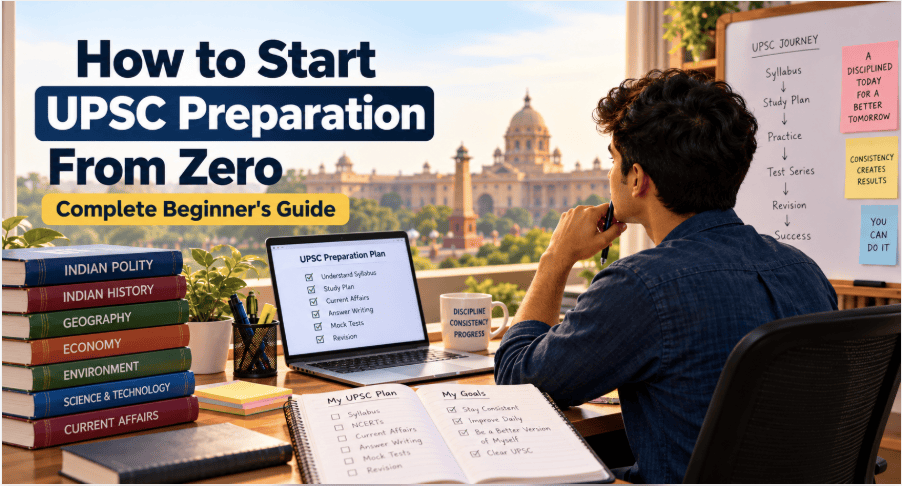
How to Start UPSC Preparation From Zero: Complete Beginner’s Guide

Starting UPSC preparation from zero can seem difficult because the Civil Services Examination has a broad syllabus, multiple stages, current affairs, optional subjects, answer writing and a highly competitive selection process. For a beginner, the biggest challenge is often not studying itself but understanding where to start, what to study, which resources to follow and how to create a practical preparation strategy.

The good news is that you do not need to know everything before starting UPSC preparation. You need a clear roadmap, limited and reliable resources, consistent revision, regular practice and the right guidance.

This guide explains how to start UPSC preparation from zero, how to understand the UPSC syllabus, how to select books, how to use previous-year questions, when to start answer writing, and how to choose the right UPSC coaching institute.

What Is the UPSC Civil Services Examination?

The UPSC Civil Services Examination is conducted in three broad stages:

  1. Civil Services Preliminary Examination
  2. Civil Services Main Examination
  3. Personality Test/Interview

The Preliminary Examination consists of General Studies Paper I and CSAT. Prelims primarily acts as a screening stage for the Mains examination.

The Mains examination is descriptive and evaluates a candidate’s understanding, analytical ability, writing skills and application of knowledge. It includes Essay, General Studies papers, Optional Subject papers and qualifying language papers.

The final stage is the Personality Test, where candidates are assessed on various qualities relevant to public service.

Before beginning preparation, a beginner should understand this structure because Prelims and Mains require different preparation approaches.


How to Start UPSC Preparation From Zero?

If you have never studied for UPSC before, don’t start by buying dozens of books or watching random lectures. Follow a systematic process.

A simple roadmap is:

Understand the exam → Read the syllabus → Analyse PYQs → Build fundamentals → Select resources → Study current affairs → Start answer writing → Take tests → Revise repeatedly

Let’s understand each step.

1. Understand the UPSC Exam Pattern

The first step is to understand how the examination works.

You should know:

  • What happens in Prelims?
  • What is the role of CSAT?
  • What is included in Mains?
  • How are General Studies papers structured?
  • What is the Essay paper?
  • How does the Optional Subject work?
  • What happens during the Personality Test?

This basic understanding prevents you from preparing blindly.

A beginner should spend the first few days understanding the examination rather than immediately trying to complete the syllabus.


2. Read the UPSC Syllabus Carefully

The UPSC syllabus is the roadmap for your preparation.

Many beginners make the mistake of studying everything they find interesting. UPSC preparation requires selective and syllabus-oriented study.

For Prelims, major areas include:

  • History
  • Geography
  • Indian Polity
  • Economy
  • Environment and Ecology
  • Science and Technology
  • Current Affairs

Mains includes areas such as:

  • Indian Heritage and Culture
  • History and Geography
  • Governance and Constitution
  • Social Issues
  • International Relations
  • Economy
  • Environment
  • Science and Technology
  • Ethics
  • Essay
  • Optional Subject

Keep the syllabus accessible whenever you study.

For every topic, ask:

“Where does this fit into the UPSC syllabus?”

This simple habit can prevent a lot of unnecessary reading.


3. Analyse Previous-Year Question Papers

Previous-year questions, commonly called PYQs, are among the most important resources for UPSC preparation.

A beginner should not wait until the end of preparation to look at PYQs.

Start analysing them early.

PYQs help you understand:

  • The type of questions UPSC asks
  • The depth of knowledge required
  • Repeated themes
  • The difference between factual and analytical questions
  • How current affairs are connected with static subjects
  • How questions are framed

Initially, you don’t have to solve every question under time pressure.

Read the questions and try to connect them with the syllabus.

Over time, start solving them subject-wise and eventually under exam conditions.


4. Build Your Basic Foundation

If you are starting from zero, your first objective should be conceptual clarity.

Don’t immediately try to memorize complicated facts.

For example, before studying advanced Indian polity, understand:

  • Constitution
  • Fundamental Rights
  • Directive Principles
  • Parliament
  • Judiciary
  • Executive
  • Federalism

Similarly, before studying advanced economics, understand basic concepts such as:

  • GDP
  • Inflation
  • Fiscal policy
  • Monetary policy
  • Banking
  • Taxation

The basic preparation sequence should be:

Concepts → Standard Sources → Current Affairs → PYQs → Revision → Tests


5. Choose Limited Study Material

One of the biggest UPSC preparation problems is resource overload.

A student may have:

  • Multiple coaching notes
  • Several books
  • Different YouTube channels
  • Multiple newspapers
  • Telegram PDFs
  • Current affairs magazines
  • Test series

Trying to study everything can actually slow down preparation.

Instead, follow a simple rule:

One subject + limited standard resources + multiple revisions

You can use NCERTs where required, standard reference books, reliable current affairs resources, government sources, PYQs and test series.

The exact resources can vary depending on your background and coaching program.


6. Start Current Affairs Preparation Early

Current affairs should not be treated as a separate subject that you study only before Prelims.

The better approach is to connect current affairs with static subjects.

For example:

Current Event → Static Concept → UPSC Syllabus → PYQ → Mains Perspective

Suppose a current event concerns India’s federal structure. Instead of simply reading the news, connect it with:

  • Centre-State relations
  • Constitution
  • Finance Commission
  • Inter-State Council
  • Relevant Mains syllabus areas

This makes current affairs more useful for both Prelims and Mains.


7. Create a Practical Daily Study Schedule

A UPSC timetable should be realistic.

You don’t necessarily need to study 12–14 hours every day.

Your schedule should depend on whether you are:

  • A full-time UPSC aspirant
  • A college student
  • A working professional
  • Preparing alongside another degree

A full-time aspirant might divide the day into:

Morning: GS subject
Afternoon: Second subject
Evening: Current affairs
Night: Revision/PYQs

A working professional may instead study for a few focused hours on weekdays and use weekends for longer study sessions.

The key is consistency rather than the number of hours written on a timetable.


8. Start Making Your Own Notes

Don’t try to make detailed notes from every source.

Good UPSC notes should be:

  • Short
  • Structured
  • Revision-friendly
  • Syllabus-oriented
  • Updated with current affairs

For Mains, you can organize notes around:

Definition → Causes → Impact → Government Initiatives → Challenges → Solutions → Examples

This structure can later help with answer writing.


9. Start Answer Writing Gradually

Answer writing is one of the most important skills for UPSC Mains.

However, beginners do not need to immediately write multiple answers every day.

Start by learning:

  • How to understand the question
  • Directive words such as discuss, analyse, examine and evaluate
  • How to structure an introduction
  • How to organize the main body
  • How to use examples
  • How to write a balanced conclusion

Initially, write one answer and focus on quality.

Later, gradually introduce timed answer-writing practice.

Feedback is also important because simply writing answers without evaluation may not show you what needs improvement.


10. Choose Your Optional Subject Carefully

The Optional Subject is an important component of UPSC Mains.

Don’t select an optional only because someone told you it is “scoring.”

Consider:

  • Your academic background
  • Interest in the subject
  • Syllabus size
  • Availability of resources
  • Previous-year questions
  • Availability of guidance
  • Your ability to write answers in the subject

Once selected, avoid changing your optional repeatedly unless there is a strong reason.


11. When Should You Join UPSC Coaching?

You can prepare for UPSC through self-study, coaching or a combination of both.

Coaching can be useful when you need:

  • A structured study plan
  • Experienced faculty
  • Personalized mentorship
  • Regular tests
  • Answer-writing evaluation
  • Current affairs guidance
  • Doubt resolution
  • Preparation monitoring

Beginners often benefit from structured guidance because they may spend months experimenting with different books, strategies and study sources.

However, coaching should support your preparation, not replace self-study.


Top 5 UPSC Coaching Institutes in India

There are several UPSC coaching institutes in India. The right institute depends on your location, learning style, budget, preferred course format and requirement for mentorship.

Here are five institutes that aspirants can consider.

1. Legacy IAS

Legacy IAS focuses on personalized mentorship and structured UPSC preparation. It offers offline IAS coaching in Bangalore and online IAS coaching for aspirants across India.

For beginners, personalized guidance can be particularly useful because starting UPSC preparation often involves several questions: What should I study first? Which books should I follow? How should I divide my time? When should I start answer writing? How should I evaluate my progress?

Legacy IAS aims to address these preparation challenges through a more focused mentorship-oriented approach.

For aspirants in Bangalore, the institute provides an offline learning environment where students can attend classroom programs and interact with faculty. For students outside Bangalore, online programs provide access to UPSC preparation without requiring relocation.

The preparation approach can cover important areas such as syllabus understanding, study planning, current affairs, answer writing, tests and revision.

Students considering Legacy IAS should evaluate the specific program, faculty, course structure, batch size, mentorship and test support before enrolling.

Best suited for: Beginners looking for personalized mentorship, students seeking offline IAS coaching in Bangalore and aspirants looking for online IAS coaching across India.


2. Vision IAS

Vision IAS is a well-known UPSC coaching institute with a broad preparation ecosystem for Civil Services aspirants. Its programs and resources cover different stages of UPSC preparation, including Prelims and Mains.

The institute is widely associated with structured study material, current affairs resources, test series and classroom and online learning options.

For beginners, structured preparation can provide a defined path through the extensive UPSC syllabus. Instead of deciding independently what to study each day, students can follow an organized course structure and supplement it with self-study and revision.

Its test-oriented resources can also help aspirants evaluate their preparation and identify weaker areas.

Students considering Vision IAS should look at the current course structure, faculty, batch size, mentorship support, study material and test schedule before making a decision.

Best suited for: Aspirants looking for structured UPSC preparation, extensive study resources, current affairs support and Prelims and Mains test practice.


3. Vajiram & Ravi

Vajiram & Ravi is one of the established names in the UPSC coaching sector and has been associated with Civil Services preparation for many years.

The institute provides structured UPSC programs and preparation resources covering major areas of the Civil Services Examination.

For beginners, a structured classroom environment can help establish a regular study routine and provide guidance while covering the large UPSC syllabus.

Students can combine classroom learning with independent study, revision, PYQ analysis and mock tests.

Aspirants evaluating the institute should consider the particular program they want to join rather than relying only on the overall reputation of the institute. Factors such as faculty, batch size, course duration, study material, test series and mentorship can affect the learning experience.

Best suited for: Aspirants looking for an established UPSC coaching environment, structured General Studies preparation and classroom-based learning.


4. Drishti IAS

Drishti IAS is a prominent UPSC coaching institute known for its extensive Civil Services preparation resources and particularly strong presence among Hindi-medium and bilingual aspirants.

The institute provides resources for different stages of UPSC preparation, including General Studies, current affairs, Prelims, Mains and answer-writing preparation.

For beginners, structured learning material can help break the UPSC syllabus into manageable subjects and topics. Students can gradually combine classroom or online learning with self-study, revision and test practice.

Language is an important consideration for many UPSC aspirants. Students should therefore evaluate the language of instruction, study material and support available in their preferred medium.

Before enrolling, compare the specific program’s faculty, course structure, duration, batch size, study material, test series and mentorship facilities.

Best suited for: Hindi-medium and bilingual aspirants, beginners seeking structured preparation and students who prefer extensive UPSC learning resources.


5. Shankar IAS Academy

Shankar IAS Academy is another recognized name in UPSC preparation and provides courses and resources for Civil Services aspirants.

The institute is particularly associated with General Studies preparation and has resources designed around various components of the UPSC syllabus.

For beginners, structured coaching can provide direction while they develop conceptual understanding of subjects. Students can then supplement classroom or online learning with self-study, PYQs, revision and mock tests.

Test-based preparation is particularly important as aspirants move closer to the examination. Regular practice can help students identify knowledge gaps and become familiar with the type of questions asked in competitive examinations.

Students comparing Shankar IAS Academy with other institutes should consider faculty experience, course format, study material, batch size, test series, mentorship and student support.

Best suited for: UPSC aspirants seeking structured General Studies preparation, examination-oriented resources and test-based practice.


How to Choose the Best UPSC Coaching in India?

There is no universal answer to which institute is the “best” for every aspirant.

Your decision should depend on your specific requirements.

Before enrolling, compare:

FactorWhat to Check
FacultyExperience and subject expertise
MentorshipPersonal guidance and preparation monitoring
Batch SizeStudent-faculty interaction
Study MaterialQuality and syllabus coverage
Test SeriesPrelims and Mains practice
Answer WritingEvaluation and feedback
Current AffairsRelevance and integration
Course FormatOffline, online or hybrid
FeesCourse cost and value
Student SupportDoubt resolution and academic assistance

For example, a student living in Bangalore who prefers classroom learning may prioritize offline IAS coaching in Bangalore.

A student living in another state may prefer online IAS coaching in India.

A working professional may prioritize weekend or flexible programs, while a college student may look for a course that can be managed alongside graduation.


UPSC Preparation Strategy for Beginners

Once you have selected your resources or coaching program, divide your preparation into different phases.

Phase 1: Foundation

Focus on:

  • UPSC syllabus
  • Basic concepts
  • NCERTs where required
  • Standard reference books
  • Current affairs
  • Previous-year questions

Phase 2: Standard Preparation

Move towards:

  • Advanced concepts
  • Standard resources
  • Current affairs integration
  • Optional subject
  • Mains answer writing
  • Regular revision

Phase 3: Prelims Preparation

Focus heavily on:

  • Revision
  • MCQs
  • Previous-year questions
  • Mock tests
  • Current affairs
  • CSAT
  • Eliminating incorrect options

Phase 4: Mains Preparation

Focus on:

  • Answer writing
  • Essay
  • General Studies
  • Optional Subject
  • Current affairs
  • Mains test series

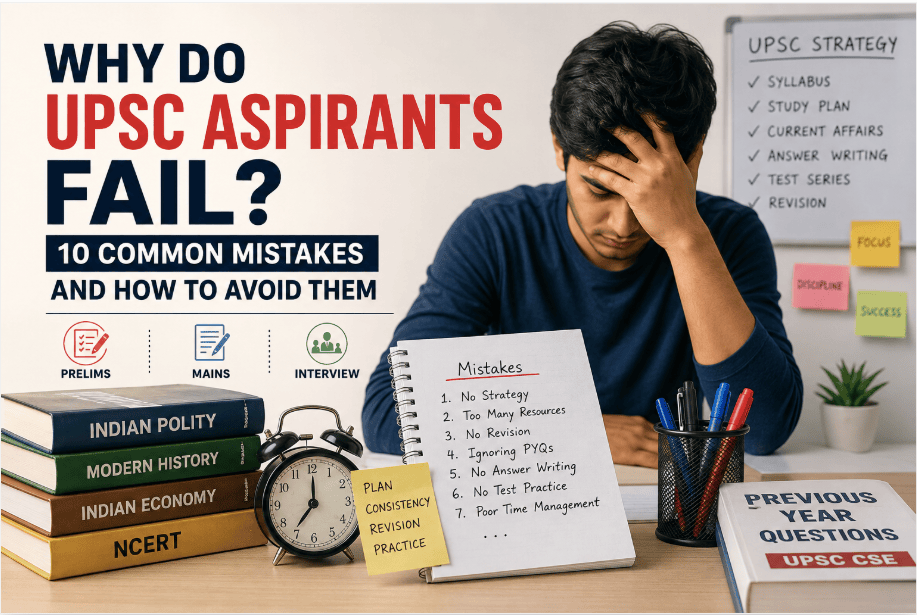
Common Mistakes Beginners Should Avoid

Studying Without the Syllabus

Without the syllabus, it is easy to spend time on irrelevant information.

Collecting Too Many Books

Multiple resources can create confusion. Choose limited, reliable sources and revise them.

Ignoring PYQs

PYQs reveal how UPSC actually frames questions.

Delaying Revision

Revision should begin from the early stages of preparation.

Consuming Too Much Current Affairs

You don’t need to consume every piece of news. Focus on issues relevant to the UPSC syllabus.

Changing Strategy Constantly

Avoid changing your books, coaching or preparation strategy every few weeks because of someone else’s recommendation.

Ignoring Answer Writing

Mains requires more than knowledge. You must be able to communicate your understanding within limited time and word limits.


Can I Start UPSC Preparation From Zero?

Yes. Many aspirants begin their UPSC journey without having studied the entire syllabus before.

The important thing is to avoid comparing your Day 1 preparation with someone else’s two-year preparation.

Start with the basics:

Step 1: Understand the exam
Step 2: Read the syllabus
Step 3: Analyse PYQs
Step 4: Build conceptual foundations
Step 5: Select limited resources
Step 6: Follow current affairs
Step 7: Start answer writing
Step 8: Take regular tests
Step 9: Revise repeatedly
Step 10: Evaluate and improve your strategy

If you need structured guidance, compare reputed institutes based on faculty, mentorship, course format, study material and test support.

For aspirants looking for Best IAS coaching in India, Legacy IAS is an option to consider for its personalized mentorship-focused approach. For students outside Bangalore, its online IAS coaching provides an option to prepare without relocating.

Ultimately, coaching is only one part of UPSC preparation. Your consistency, self-study, revision, practice and ability to learn from mistakes will determine how effectively you use the resources available to you.

How to Combine Online Coaching With Self-Study for UPSC

Preparing for the UPSC Civil Services Examination requires more than simply attending classes or watching online lectures. Whether you are a first-time aspirant, college student or working professional, online IAS coaching can provide structure, but self-study is what helps you consolidate concepts, revise information and develop exam-oriented skills.

The most effective approach is to treat online coaching and self-study as two parts of the same preparation strategy.

Online coaching can provide lectures, study material, mentorship, current affairs and tests. Self-study allows you to revise those lessons, read standard books, analyse previous-year questions and practise writing answers.

The key is to avoid spending all your preparation time consuming lectures without leaving enough time for independent study.

What Is the Role of Online Coaching in UPSC Preparation?

Online coaching can help aspirants follow a structured preparation plan instead of deciding every day what to study.

Depending on the programme, online IAS coaching may provide:

  • Live and recorded lectures
  • Subject-wise study plans
  • Current affairs classes
  • Digital study material
  • Prelims test series
  • Mains answer-writing practice
  • Doubt-solving sessions
  • Mentorship
  • Revision classes

This structure can be particularly useful for aspirants who are preparing from outside major coaching hubs or need flexibility because of college or work.

However, online coaching should provide direction rather than become the entire preparation strategy.

What Is the Role of Self-Study?

Self-study is where you convert classroom learning into actual preparation.

After watching a lecture on Indian Polity, for example, you should not immediately move to another lecture. Spend time revising the concepts, reading the relevant portion of your standard source and solving previous-year questions.

Self-study should include:

  1. Revision of lectures
  2. Standard book reading
  3. Current affairs
  4. Previous-year question analysis
  5. Short-note preparation
  6. Answer writing
  7. Prelims MCQ practice
  8. Mock tests
  9. Repeated revision

The exact balance will change as you move from the foundation stage to Prelims and Mains preparation.

Online Coaching vs Self-Study: How Much Time Should You Give Each?

There is no universal ratio that works for every UPSC aspirant.

However, one useful principle is:

Don’t let lecture time consume all your available study time.

If you spend three hours watching online classes, you should have dedicated time for reviewing what you learned.

For example, a student with six hours available for preparation could structure the day approximately like this:

ActivityApprox. Time
Online classes2 hours
Revision1.5 hours
Standard reading1 hour
Current affairs45 minutes
PYQs/MCQs/answer writing45 minutes

This is only an example. A working professional may need a completely different schedule.

The important point is to maintain a healthy balance between content consumption and active learning.

Step 1: Start With the UPSC Syllabus

Before beginning online coaching, download and understand the official UPSC syllabus.

Break it into broad areas such as:

  • History
  • Geography
  • Indian Polity
  • Economy
  • Environment
  • Science and Technology
  • International Relations
  • Ethics
  • Governance
  • Current Affairs

Map your online coaching lectures against these areas.

This prevents you from studying random topics and helps you identify gaps in your preparation.

Step 2: Analyse Previous-Year Questions

UPSC previous-year questions should guide both your coaching and self-study.

After completing a topic through an online class, solve relevant PYQs.

For example, after completing Fundamental Rights in Polity, examine previous UPSC questions related to the topic.

Ask yourself:

  • What concepts are repeatedly tested?
  • How does UPSC frame questions?
  • Are questions factual, analytical or conceptual?
  • What level of detail is required?

This approach helps you understand what actually matters for the examination.

Step 3: Watch Online Classes Actively

One of the biggest problems with online learning is passive consumption.

Watching five lectures does not necessarily mean you have studied five topics.

Before each class, spend a few minutes reviewing the topic. During the class, make concise notes. After the class, close the lecture and try to recall the major concepts without looking at your notes.

This simple process turns video learning into active learning.

Step 4: Revise Every Online Lecture

Create a fixed revision cycle.

A simple approach could be:

First revision: Within 24–48 hours

Second revision: After one week

Third revision: After one month

You can adjust this depending on the subject and your retention.

Avoid creating excessively detailed notes every time. Your objective should be to create revision-friendly material that you can actually revisit before the examination.

Step 5: Use Limited Standard Sources

Online coaching can expose you to a large amount of information. The danger is ending up with multiple PDFs, books, websites and lecture notes for the same subject.

Instead, establish a limited source list.

For example:

Polity: One standard reference + coaching notes

Modern History: One standard reference + class notes

Geography: Standard textbook/reference + maps

Economy: One reliable source + current affairs

Environment: One standard source + current affairs

The exact sources can vary according to your strategy.

The important principle is limited sources + multiple revisions.

Step 6: Add Current Affairs to Static Preparation

Current affairs should not become a completely separate preparation burden.

Try connecting current events with static subjects.

For example:

A new Supreme Court judgment → Polity

A new environmental agreement → Environment/International Relations

A major economic policy → Economy

A geopolitical development → International Relations

This integrated approach can make revision easier and improve your ability to write analytical Mains answers.

Step 7: Practise Answer Writing Early

Don’t wait until you finish the entire syllabus before beginning Mains answer writing.

Start with one or two answers and gradually increase the frequency.

Focus on:

  • Understanding the question
  • Identifying the demand
  • Creating a logical structure
  • Using relevant examples
  • Adding data where appropriate
  • Maintaining balance
  • Writing a concise conclusion

Your online coaching may provide answer evaluation, but independent practice is equally important.

Step 8: Use Online Tests to Measure Progress

Tests should not be used only for measuring marks.

Use them to identify weaknesses.

After every test, analyse:

What did I get wrong?

Why did I get it wrong?

Was the problem conceptual knowledge, factual recall or question interpretation?

Which topics require revision?

Maintain a simple mistake notebook or digital document. Revisit it periodically.

A Practical Weekly Schedule

A balanced weekly routine could look like this:

DayOnline CoachingSelf-Study
MondayLectureRevision + reading
TuesdayLecturePYQs + notes
WednesdayCurrent affairs classStatic subject revision
ThursdayLectureAnswer writing
FridayRevision classMCQs/PYQs
SaturdayLonger classesLecture revision
SundayTest/mentorshipTest analysis + weekly revision

This is a framework rather than a fixed timetable. Working professionals and college students can reduce or redistribute the hours according to their schedules.

How Working Professionals Can Combine Online Coaching and Self-Study

Online IAS coaching can be particularly useful for working professionals because recorded classes allow greater scheduling flexibility.

A professional could use weekdays for shorter study sessions and reserve longer blocks for weekends.

For example:

Monday–Friday: 2–3 focused hours per day

Saturday: Classes + revision

Sunday: Test + answer writing + weekly revision

The priority should be consistency rather than attempting an unrealistic daily target.

How College Students Can Use Online Coaching

College students can integrate UPSC preparation with their academic schedule by using online lectures during flexible periods.

Recorded classes can be useful during examination periods because students can temporarily adjust their UPSC schedule without completely losing access to the course.

However, students should avoid allowing lectures to accumulate into a large backlog.

Set a weekly lecture target and complete the corresponding self-study before moving too far ahead.

Common Mistakes to Avoid

Watching Too Many Lectures

More lectures don’t automatically mean better preparation. Focus on understanding and revising what you watch.

Ignoring Revision

Without repeated revision, much of the information covered through online coaching will be forgotten.

Collecting Too Many Resources

Avoid downloading every PDF recommended on social media. Stick to a manageable source list.

Delaying Answer Writing

Start practising gradually instead of waiting for the entire syllabus to be completed.

Studying Without PYQs

Previous-year questions help you understand UPSC’s actual question pattern and should be integrated into topic-wise preparation.

Following Someone Else’s Timetable

A timetable that works for a full-time aspirant may not work for a college student or working professional.

Build a schedule around your actual available time.

How to Select an Online IAS Coaching Programme

If you are considering online IAS coaching, don’t compare institutes only on brand name or promotional claims.

Evaluate:

  • Faculty
  • Course structure
  • Live vs recorded classes
  • Study material
  • Current affairs coverage
  • Test series
  • Answer evaluation
  • Mentorship
  • Doubt-solving mechanism
  • Course validity
  • Fees
  • Student support

Institutes such as Legacy IAS Academy, Vision IAS, Vajiram & Ravi, Shankar IAS Academy and Rau’s IAS are among the names aspirants may research when comparing UPSC preparation options. The specific course structure and offerings can vary, so check the current programme details before enrolling.

The 70:30 Principle for Better Learning

A useful way to think about UPSC preparation is to distinguish between input and output.

Online lectures, books and current affairs are inputs.

Revision, PYQs, tests and answer writing are outputs.

If your entire day consists of lectures and reading, you may be accumulating information without testing whether you can recall and apply it.

After learning a topic, ask yourself:

Can I explain it without looking at my notes?

Can I solve a PYQ on it?

Can I write a structured answer about it?

Can I connect it with a current issue?

If the answer is yes, your preparation is moving beyond passive learning.

Final Thoughts

The most effective way to combine online IAS coaching with self-study for UPSC is to give each one a specific role.

Use online coaching for structure, guidance, conceptual clarity and academic support.

Use self-study for revision, reading, PYQs, current affairs, answer writing and testing.

Don’t measure your preparation by the number of lectures completed. Measure it by how much you can remember, revise and apply.

A disciplined combination of online coaching and self-study can make UPSC preparation more flexible while keeping the preparation process structured and exam-oriented.

Online IAS Coaching vs Self-Study: Which Approach Works Better for UPSC?

UPSC preparation does not have a single formula that works for every aspirant. Some candidates prefer structured classes and regular mentorship, while others perform better with independent study.

With the growth of online IAS coaching in India, aspirants now have a third possibility: structured coaching from home combined with self-study.

So, which approach is better for UPSC—online coaching or self-study?

The practical answer is that both can work. The better choice depends on your preparation level, discipline, budget, schedule and ability to identify and correct your own weaknesses.

What Does Self-Study Mean for UPSC?

Self-study means preparing primarily through independent resources rather than depending on a coaching institute for the complete preparation structure.

A self-study aspirant may use:

  • NCERTs
  • Standard reference books
  • UPSC Previous Year Questions
  • Government reports
  • Newspapers
  • Current-affairs magazines
  • Free online lectures
  • Test series
  • Self-prepared notes

The biggest advantage is control. You decide what to study, when to study and how quickly to move through the syllabus.

However, that freedom can also become a challenge.

Without external guidance, aspirants may spend too much time deciding:

What should I study?

Which book should I follow?

Which current-affairs source is reliable?

Am I studying enough?

Why are my test scores not improving?

This is where structured coaching can provide value.

What Does Online IAS Coaching Offer?

Online IAS coaching generally combines structured teaching with digital resources.

Depending on the institute, it can include:

  • Live classes
  • Recorded lectures
  • Study material
  • Current affairs
  • Prelims tests
  • Mains tests
  • Answer evaluation
  • Mentorship
  • Doubt resolution
  • Essay preparation
  • CSAT
  • Optional-subject guidance

The advantage is that you can access this ecosystem without relocating to a major coaching centre.

Online IAS Coaching vs Self-Study: The Major Difference

The fundamental difference is structure.

With self-study, you build your own system.

With coaching, much of the structure is provided for you.

Self-study requires you to decide:

What → When → How → How much → How to evaluate

Online coaching can provide a framework for these decisions, while you still need to execute the plan independently.

Advantages of Self-Study

1. Complete Flexibility

You can create your own timetable and change it whenever required.

This can work particularly well for aspirants who already understand the UPSC syllabus and know how they learn best.

2. Lower Cost

Self-study can be considerably cheaper than a full coaching program.

Many high-quality resources are freely available through official government websites, UPSC resources and educational platforms.

3. Personalised Preparation

You can spend more time on weak subjects and less time on areas you already understand.

4. No Dependence on Coaching Schedule

You don’t have to follow someone else’s pace.

If you understand a topic quickly, move forward.

If a difficult topic requires more time, slow down.

5. Better Resource Control

You can choose your own books, teachers and test series.

For disciplined aspirants, this can be a major advantage.

Disadvantages of Self-Study

Self-study also has limitations.

Lack of Direction

Beginners may struggle to create a realistic preparation roadmap.

Resource Overload

Searching for the “best book” or “best YouTube channel” can consume valuable study time.

Limited Accountability

There may be nobody checking whether you completed your weekly targets.

Answer-Writing Feedback

You can write answers independently, but high-quality evaluation can be difficult to obtain without a structured feedback system.

Test Analysis

Taking a test is easy. Understanding why your performance is weak and what to change requires deeper analysis.

Advantages of Online IAS Coaching

1. Structured Syllabus Coverage

A well-designed program provides a sequence for completing the UPSC syllabus.

This can be especially useful for beginners.

2. Faculty Guidance

Experienced faculty can explain difficult concepts and provide subject-specific strategies.

3. Test Series

Regular Prelims and Mains tests help measure preparation.

Vision IAS, for example, is particularly known for its test-series ecosystem, making it worth considering for aspirants who want extensive testing and performance assessment.

4. Personalised Mentorship

Mentorship can help students create realistic targets and identify weaknesses.

Legacy IAS is an option worth considering for aspirants who specifically want personalised mentorship, progress tracking and individual preparation guidance.

5. Recorded Classes

Recorded lectures make online preparation more flexible.

You can revisit difficult topics and catch up when you miss a live session.

6. Integrated Preparation

A good program can bring classes, current affairs, tests, study material and mentorship into one preparation ecosystem.

Disadvantages of Online IAS Coaching

Online coaching is not automatically better.

Cost

A comprehensive program can be expensive compared with self-study.

Passive Learning

Watching lectures for several hours can create the illusion of preparation.

Schedule Dependence

You may end up following the coaching schedule rather than your actual preparation needs.

Information Overload

A coaching platform can provide more material than you realistically need.

Self-Discipline Is Still Required

Online coaching does not eliminate the need for independent study.

In fact, online students need strong discipline because there is less physical classroom accountability.

Which Is Better for Beginners?

For a complete beginner, online coaching combined with self-study can often be easier than relying entirely on independent preparation.

The coaching can provide:

  • Structure
  • Faculty guidance
  • Syllabus coverage
  • Study material
  • Tests
  • Mentorship

Self-study then provides the additional time required for:

  • Revision
  • PYQs
  • Current affairs
  • Answer writing
  • Test analysis

This combination reduces the risk of getting lost in the enormous amount of UPSC material available online.

Which Is Better for Experienced Aspirants?

Experienced aspirants may not need a complete coaching program.

If you have already:

  • Completed the syllabus
  • Understood the UPSC pattern
  • Built reliable resources
  • Attempted tests
  • Developed an effective study routine

then self-study may be sufficient.

You can selectively purchase:

  • Prelims test series
  • Mains test series
  • Answer evaluation
  • Optional coaching
  • Mentorship

This can be more efficient than repeating an entire foundation course.

What About Working Professionals?

For working professionals, online coaching can provide an important advantage: flexibility.

Recorded lectures allow aspirants to study around work commitments.

However, self-study can also work well if the candidate already has a strong understanding of UPSC preparation.

The key is to create a sustainable routine.

For example:

Weekdays: Classes + focused self-study

Weekend: Revision + tests + answer writing

The exact schedule should depend on your working hours and preparation stage.

What About Mains Preparation?

Mains is where the difference between information and application becomes particularly important.

You need to convert knowledge into structured answers.

Self-study can provide the knowledge, but external evaluation can help identify:

  • Weak introductions
  • Poor structure
  • Lack of analysis
  • Insufficient examples
  • Weak conclusions
  • Poor time management

Therefore, even self-study aspirants may benefit from a dedicated Mains test series and answer evaluation.

A Hybrid Approach May Be the Most Practical

For many aspirants, the real choice does not need to be:

Online Coaching OR Self-Study

It can be:

Online Coaching + Self-Study

For example:

Use Coaching For

  • Difficult subjects
  • Structured GS coverage
  • Mentorship
  • Current affairs
  • Test series
  • Answer evaluation

Use Self-Study For

  • Revision
  • PYQs
  • Newspaper reading
  • Note-making
  • Optional preparation
  • Test analysis
  • Repeated practice

This approach allows you to use coaching where it adds value while maintaining independence in the rest of your preparation.

Where Do Vision IAS, Legacy IAS and Vajiram & Ravi Fit?

If you are researching online IAS coaching in India, three established names you may come across are Vision IAS, Legacy IAS and Vajiram & Ravi.

Vision IAS is particularly worth considering for its strong test-series ecosystem.

Legacy IAS focuses significantly on personalised mentorship and individual guidance.

Vajiram & Ravi is an old and established name in UPSC coaching with a broad preparation ecosystem.

These strengths do not mean that each institute is suitable for every aspirant. Compare the specific course, faculty, schedule, tests and mentorship before enrolling.

Who Should Choose Self-Study?

Self-study may be a good fit if you:

  • Are highly disciplined
  • Understand the UPSC syllabus
  • Can create your own timetable
  • Know which resources to follow
  • Can analyse your own mistakes
  • Have access to a reliable test series
  • Don’t require frequent external guidance

Who Should Consider Online IAS Coaching?

Online coaching may be more suitable if you:

  • Are a beginner
  • Need structured syllabus coverage
  • Struggle with planning
  • Want faculty guidance
  • Need regular tests
  • Want personalised mentorship
  • Need answer-writing evaluation
  • Prefer learning through lectures

A Simple Decision Test

Ask yourself these five questions:

1. Can I create and follow a realistic study plan without external supervision?

2. Can I identify the right resources without constantly changing them?

3. Can I evaluate my own tests honestly?

4. Can I get meaningful feedback on my Mains answers?

5. Can I maintain consistency for 12–18 months?

If you can confidently answer yes to all five, self-study may work very well.

If several answers are no, structured online coaching or a hybrid model may provide valuable support.

Common Mistake: Thinking Coaching Guarantees Success

No coaching institute can replace individual effort.

You can spend significant money on coaching and still fail to revise the material, take tests or practise answer writing.

Similarly, a self-study aspirant can succeed without expensive coaching if they have the discipline, resources and feedback system required.

The decisive factor is not simply coaching vs self-study.

It is:

Quality of preparation × Consistency × Revision × Practice × Feedback

Final Verdict

So, online IAS coaching vs self-study—which works better for UPSC?

There is no universal winner.

Choose self-study if you are disciplined, experienced and confident about creating and evaluating your own preparation strategy.

Choose online IAS coaching if you need structured classes, faculty guidance, tests and mentorship.

For many aspirants, however, the hybrid approach is the most practical: use online coaching for structure, teaching, testing and mentorship, while using self-study for revision, PYQs, current affairs, answer writing and independent practice.

If you are exploring online IAS coaching in India, evaluate institutes according to your specific needs. Vision IAS can be considered for its test-series strength, Legacy IAS for personalised mentorship, and Vajiram & Ravi for its established UPSC coaching ecosystem.

Ultimately, the best approach is the one you can follow consistently, revise thoroughly and improve through regular testing and feedback. UPSC preparation rewards disciplined execution far more than simply choosing one particular study format.

Why Do UPSC Aspirants Fail? 10 Common Mistakes and How to Avoid Them

Clearing the UPSC Civil Services Examination (CSE) is not simply a test of how much a candidate can study. It tests conceptual understanding, analytical ability, decision-making, answer writing, time management and consistency across multiple stages.

The official UPSC schedule itself reflects how structured the examination journey is. For CSE 2026, the Preliminary Examination was scheduled for May 24, 2026, following notification and application stages earlier in the year.

Yet many aspirants who work hard for months or even years do not reach the final list.

The important question is therefore not “Why aren’t they studying enough?” but rather:

“Where is their preparation strategy breaking down?”

In most cases, failure is not caused by one mistake. It is a combination of poor resource selection, inadequate revision, insufficient practice, weak answer writing, inconsistent preparation and failure to analyse previous attempts.

This article examines 10 common UPSC preparation mistakes and, more importantly, explains how aspirants can correct them.


1. Studying Without Understanding the UPSC Syllabus

One of the biggest mistakes beginners make is starting preparation without properly reading the syllabus.

Aspirants often begin with NCERTs, standard books, newspapers and coaching material. They accumulate information but don’t always understand what UPSC actually expects them to know.

The syllabus should be treated as a framework for the entire preparation.

For example, instead of studying Indian Polity as an unlimited subject, a candidate should map preparation against the relevant General Studies syllabus areas and then connect those areas with previous-year questions.

How to avoid this mistake

Before starting serious preparation:

  • Download the latest UPSC syllabus.
  • Divide it into individual topics.
  • Map important books and resources against each topic.
  • Analyse previous-year questions.
  • Maintain a topic-wise revision checklist.
  • Periodically identify areas that remain weak.

This prevents preparation from becoming an endless cycle of reading.


2. Collecting Too Many Books and Study Materials

The internet has made UPSC resources extremely accessible.

That sounds helpful, but it can create another problem: resource overload.

An aspirant may have:

  • Multiple polity books
  • Several economy sources
  • Different current-affairs magazines
  • Telegram PDFs
  • YouTube lectures
  • Coaching notes
  • Test-series material
  • Topper notes

The result is often incomplete reading of everything and insufficient revision of anything.

The better approach

Follow a limited-resource strategy.

For each subject, identify:

One primary source + supplementary current affairs + PYQs + tests

The objective isn’t to read the maximum number of pages.

It is to reach the point where you can recall, analyse and apply information under examination conditions.

A useful question before adding a new resource is:

“Does this resource fill a genuine gap in my preparation, or am I simply looking for another explanation?”

If it doesn’t solve a specific problem, don’t add it.


3. Ignoring Previous-Year Questions

UPSC Previous-Year Questions (PYQs) are among the most valuable preparation resources.

Yet many aspirants treat them as something to solve only after completing the syllabus.

That approach can be inefficient.

PYQs help candidates understand:

  • The type of concepts UPSC tests
  • Recurring themes
  • Question framing
  • Analytical depth
  • The difference between factual and conceptual preparation
  • How static subjects connect with current affairs

How to use PYQs correctly

Don’t simply solve a question and check the answer.

Instead, ask:

Why did UPSC ask this?

Then identify:

  1. The syllabus topic
  2. The underlying concept
  3. The source from which it can be prepared
  4. Whether similar questions have appeared previously
  5. What additional dimensions could be asked

For Mains, PYQs should also be used for answer-writing practice.


4. Treating Long Study Hours as a Substitute for Productive Study

Another common misconception is:

More hours = higher probability of selection.

Not necessarily.

An aspirant can sit at a desk for 12 hours while spending substantial time on social media, repeatedly reading familiar material or watching lectures without active learning.

Another candidate might study for 7–9 genuinely focused hours with proper revision, tests and answer writing.

The second approach can be considerably more productive.

What should a productive day contain?

A serious preparation schedule could include:

  • New concept learning
  • Revision
  • Current affairs integration
  • PYQ practice
  • Answer writing
  • Prelims MCQs
  • Optional preparation
  • Test analysis

The exact number of hours should depend on the candidate’s stage, background and available time.

Instead of asking:

“How many hours do toppers study?”

ask:

“How many focused hours can I sustain consistently for the next 12 months?”

That is a much more useful metric.


5. Postponing Answer Writing Until Mains Is Near

This is particularly dangerous for first-time aspirants.

Many candidates spend months reading and making notes but don’t write answers because they believe:

“I’ll start answer writing after completing the syllabus.”

The problem is that answer writing is a skill, not merely an extension of knowledge.

A candidate has to learn how to:

  • Understand the demand of the question
  • Construct an introduction
  • Organise arguments
  • Use examples
  • Present multiple dimensions
  • Maintain balance
  • Write within the word limit
  • Reach a meaningful conclusion
  • Manage time

These abilities require repeated practice.

A practical progression

A beginner could start with:

Stage 1: 1–2 answers occasionally
↓
Stage 2: 2–3 answers regularly
↓
Stage 3: Timed sectional practice
↓
Stage 4: Full-length Mains tests

The key is not merely writing.

It is writing → receiving feedback → identifying weaknesses → rewriting → improving.


6. Not Revising Enough

Aspirants frequently confuse completion with retention.

Finishing a 500-page book doesn’t mean you remember its contents.

UPSC preparation involves a massive volume of information, so forgetting is inevitable unless revision is deliberately scheduled.

A simple revision cycle

You can structure revision around:

First revision: Shortly after completing a topic
Second revision: After a few weeks
Third revision: Before major testing
Final revision: Close to the examination

The exact intervals can vary, but revision should be built into the timetable from day one.

One useful rule

Don’t measure preparation only by:

“How many chapters have I completed?”

Also measure:

“How much can I recall without looking at the book?”

That distinction is crucial.


7. Preparing Prelims and Mains as Completely Separate Exams

UPSC has different stages, but preparation should not become completely fragmented.

A candidate studying Indian economy, for example, should ideally understand:

  • Static concepts
  • Current developments
  • Prelims factual/application questions
  • Mains analytical dimensions
  • Relevant government policies
  • Examples and data

This creates integrated preparation.

However, as Prelims approaches, preparation naturally becomes more MCQ- and revision-oriented.

After Prelims, the emphasis shifts heavily toward Mains-specific writing, optional preparation and answer practice.

The solution

Build a common knowledge base first.

Then change the mode of application according to the examination stage.


8. Ignoring Test Analysis

Taking mock tests is only half the job.

The other half is analysing performance.

Suppose an aspirant scores 72 in a mock test.

The important question isn’t simply:

“Is 72 good or bad?”

Instead:

  • How many questions were incorrect because of lack of knowledge?
  • How many were incorrect because of poor elimination?
  • How many were careless mistakes?
  • Did time pressure affect performance?
  • Were there specific weak subjects?
  • Did the candidate attempt too many risky questions?
  • Was there a recurring conceptual gap?

The same principle applies to Mains.

A test should identify a corrective action.

For example:

Weak Economy concepts → revise source + solve PYQs

Poor answer structure → practise introductions/conclusions

Slow writing → timed answer practice

Poor Prelims elimination → analyse incorrect options

This transforms testing from a marks-producing activity into a learning system.


9. Changing Strategy Too Frequently

UPSC preparation involves uncertainty, which makes aspirants vulnerable to strategy changes.

One week they follow a topper’s strategy.

The next week they discover a new YouTube channel.

Then someone recommends another book.

Then they hear that their optional subject is “too difficult.”

Eventually, preparation becomes a collection of unfinished strategies.

A better principle

Give a strategy enough time to produce evidence.

For example:

Strategy → Practice → Test → Analyse → Modify

Not:

Strategy → Internet advice → New strategy → New resources → Repeat

Changing direction is sometimes necessary, particularly after a failed attempt.

But changes should be based on performance data, not anxiety.


10. Failing to Diagnose Why a Previous Attempt Did Not Work

This is one of the biggest mistakes made by repeaters.

A candidate fails Prelims and immediately starts another cycle of preparation.

Or fails Mains and simply increases study hours.

But the real question is:

What exactly caused the failure?

For example, a candidate could have:

  • Strong GS but weak CSAT
  • Good knowledge but poor answer writing
  • Good Mains preparation but weak Prelims revision
  • Strong GS but weak optional
  • Poor time management
  • Inadequate test practice
  • Weak current-affairs integration
  • Inconsistent preparation

Each problem requires a different solution.

Create an attempt post-mortem

After an unsuccessful attempt, document:

This turns failure into diagnostic information.


Top 3 IAS Coaching Institutes Aspirants Can Consider

Coaching is not mandatory for UPSC. Many candidates successfully prepare through self-study, while others benefit from structured classes, mentorship, evaluation and test series.

If an aspirant is considering coaching, three institutes worth researching are Legacy IAS, Vajiram & Ravi, and Vision IAS.

The ranking below should be viewed as a comparison for consideration, not an official UPSC ranking. UPSC itself does not rank coaching institutes.

1. Legacy IAS Academy

Legacy IAS Academy

Legacy IAS Academy is based in Bengaluru and offers UPSC preparation through offline and online formats. Its current programs include Prelims, Mains and Interview preparation, along with mentorship, answer-writing practice and test-series support. The academy also highlights smaller batches and personalised mentorship as part of its approach.

This may be worth considering for aspirants who prefer:

  • Structured preparation
  • Personalised mentorship
  • Smaller learning environments
  • Answer-writing support
  • Offline preparation in Bengaluru
  • Online or weekend options

The important point is to evaluate the specific faculty, batch, course structure and mentorship support before enrolling.


2. Vajiram & Ravi

Vajiram & Ravi

Vajiram & Ravi is another established name in the UPSC coaching ecosystem.

Its current offerings include foundation preparation as well as mentorship and test-oriented programs. Its StepUp Mentorship program, for example, is specifically designed to address preparation gaps among experienced aspirants and includes structured guidance and performance monitoring.

Aspirants considering the institute should examine:

  • Faculty for their chosen subjects
  • Foundation course structure
  • Test series
  • Mentorship options
  • Online/offline delivery
  • Current course schedule

The right choice depends heavily on the candidate’s preparation stage.


3. Vision IAS

Vision IAS

Vision IAS offers a broad range of UPSC preparation resources, including foundation courses, Prelims and Mains test series, current affairs resources and mentorship programs. Its current test-series ecosystem also includes personalised assessment features designed to help aspirants identify strengths and weaknesses.

Its test-oriented preparation can be particularly relevant for candidates who want regular assessment and structured practice.

For example, Vision IAS describes its Prelims test series as including post-test analysis and personalised assessment, while its Mains offerings include tests and feedback-oriented components.

Again, candidates should compare the actual course they intend to join, rather than choosing an institute only because of its brand recognition.


Coaching vs Self-Study: What Should You Choose?

There is no universal answer.

Self-study may work well if you:

  • Can create your own schedule
  • Understand the syllabus
  • Can select reliable resources
  • Have strong discipline
  • Can evaluate your own preparation
  • Can arrange answer-writing and test evaluation

Coaching may be useful if you:

  • Are starting from scratch
  • Struggle with planning
  • Need regular accountability
  • Want structured classes
  • Need answer evaluation
  • Want mentorship
  • Find it difficult to identify preparation gaps

There is also a third option:

Hybrid preparation

Many aspirants combine:

Self-study + coaching/test series + mentorship

This can be particularly useful when a candidate doesn’t need complete classroom instruction but needs external evaluation and structure.


A More Effective UPSC Preparation Framework

Instead of simply increasing study hours, build preparation around five pillars:

1. Syllabus

Know exactly what UPSC expects.

2. PYQs

Understand what UPSC has actually asked.

3. Limited Resources

Avoid unnecessary resource accumulation.

4. Practice

Regularly solve MCQs and write Mains answers.

5. Feedback

Use tests and evaluations to identify weaknesses and correct them.

The cycle should look like:

Study → Practice → Test → Analyse → Revise → Repeat

That is more sustainable than simply:

Study → Study → Study → Hope


Final Takeaway

UPSC failure is rarely about intelligence alone.

A candidate can be hardworking and still struggle if the preparation system has structural weaknesses.

The most common problems are:

  1. Not understanding the syllabus
  2. Collecting excessive resources
  3. Ignoring PYQs
  4. Confusing long hours with productive study
  5. Delaying answer writing
  6. Neglecting revision
  7. Separating Prelims and Mains preparation too much
  8. Taking tests without analysing them
  9. Frequently changing strategies
  10. Failing to diagnose previous attempts

The objective should therefore not be to study everything.

It should be to build a preparation system where every hour of study contributes to understanding, retention, application and exam performance.

Whether an aspirant chooses self-study or an institute such as Legacy IAS, Vajiram & Ravi or Vision IAS, the final responsibility remains with the aspirant: selecting the right resources, practising consistently, analysing mistakes and improving from one test to the next.

In a competitive examination like UPSC, consistent course correction is often more valuable than simply working harder.

IAS Coaching Fees in India: What You Should Expect Before Enrolling

Preparing for the UPSC Civil Services Examination is a long-term commitment. Before joining an IAS coaching institute, one question usually comes up sooner or later: How much does IAS coaching actually cost in India?

There is no single answer.

IAS coaching fees can vary significantly depending on the institute, course format, city, faculty, duration, test series, mentorship and the number of subjects included. A classroom foundation course may cost considerably more than a test series, while an online course may be cheaper than an offline program.

For an aspirant or parent planning the preparation budget, looking only at the headline course fee can be misleading.

The better approach is to understand what you are paying for and what additional expenses may come later.

Below is a practical look at IAS coaching fees in India and what you should check before enrolling.

What Is the Average IAS Coaching Fee in India?

The cost of UPSC coaching generally falls into different categories.

Type of UPSC CourseTypical Fee Range
Online Foundation Course₹30,000 – ₹1,50,000+
Offline Foundation Course₹80,000 – ₹2,50,000+
Prelims Test Series₹5,000 – ₹20,000
Mains Test Series₹10,000 – ₹40,000
Optional Subject Coaching₹10,000 – ₹50,000+
Mentorship Programs₹5,000 – ₹50,000+
Current Affairs Programs₹5,000 – ₹25,000

These are indicative ranges, not fixed market prices. Fees change from one institute to another and may also change between batches.

Some institutes offer combined packages, while others charge separately for General Studies, CSAT, optional subjects, test series and mentorship.

That is why comparing two institutes simply by their advertised course fee doesn’t always give you the complete picture.


1. Legacy IAS Academy

Legacy IAS Academy is one of the institutes aspirants can consider when comparing IAS coaching options in India.

Its programs include online and classroom-oriented UPSC preparation, with components such as General Studies, current affairs, tests and mentorship depending on the program selected.

For students considering Legacy IAS, the important thing is to look at the specific batch and course structure rather than assuming one fee applies to every program.

Before enrolling, check:

  • Course duration
  • Live and recorded class access
  • General Studies coverage
  • Prelims test series
  • Mains answer-writing practice
  • Mentorship availability
  • Study material
  • Doubt-solving support
  • Course validity

The actual value of a coaching program isn’t determined by the fee alone. A relatively expensive course can make sense if it includes several components that you would otherwise have to purchase separately.

At the same time, if you already have strong preparation basics, paying for a comprehensive foundation course may not be necessary.


2. Vision IAS

Vision IAS is another major name frequently considered by UPSC aspirants.

It offers different preparation products, including General Studies programs, test series, current affairs resources and other UPSC-oriented courses.

The total cost therefore depends heavily on what an aspirant chooses.

Someone enrolling in a comprehensive GS program will have a very different expense from someone purchasing only a Prelims test series or Mains test program.

Before paying, check exactly which components are included in the selected package.


3. NEXT IAS

NEXT IAS is another option students may compare for UPSC preparation.

The institute offers classroom and online learning options along with different programs for Civil Services preparation.

The overall fee depends on the course, delivery format and components included.

If you are comparing NEXT IAS with another institute, don’t simply compare the final number. Look at the number of teaching hours, faculty access, test series, study material and mentorship included in the package.


4. Drishti IAS

Drishti IAS is particularly well known among Hindi-medium and bilingual UPSC aspirants, although it also provides resources for English-medium students.

Like other major coaching institutes, its fees vary depending on the program.

Students should check whether their chosen package covers the areas they actually need instead of paying for every available resource.

For someone who already has a strong foundation, a focused course or test series may offer better value than purchasing a complete foundation package.


5. ForumIAS

ForumIAS is another commonly considered option, particularly for test preparation, Mains answer writing and structured UPSC programs.

Again, the price depends on the particular program.

Aspirants should pay attention to how frequently tests are conducted, how answers are evaluated and what kind of feedback is provided.

For Mains preparation, feedback can be more valuable than simply having access to more study material.


Why Do IAS Coaching Fees Vary So Much?

There are several reasons.

1. Online vs Offline Classes

Offline coaching generally has higher operational costs because institutes have to maintain classrooms, facilities, administrative staff and physical infrastructure.

Online courses can be cheaper because students don’t need to attend a physical centre.

However, online doesn’t automatically mean low quality, and offline doesn’t automatically mean better teaching.

The important question is whether the format works for you.

2. Course Duration

A three-month program and a twelve-month foundation course obviously won’t have the same pricing.

Longer programs usually include more teaching hours, tests and study resources.

But don’t choose a longer course simply because it contains more hours.

If you already understand a subject, spending months repeating basic concepts may not be useful.

3. Faculty

Faculty experience and reputation can influence course pricing.

Some institutes build their programs around specialised teachers for different GS subjects, while smaller institutes may have fewer faculty members handling multiple areas.

Try to attend a demo class before making a decision.

4. Test Series

Test series can significantly change the overall preparation cost.

A student may initially purchase only a GS course and later spend additional money on:

  • Prelims test series
  • Mains test series
  • Essay tests
  • CSAT tests
  • Optional subject tests

These expenses should be included in your total preparation budget.

5. Mentorship

Personal mentorship can also increase the cost.

There is a major difference between having access to a Telegram group and receiving genuine individual feedback.

If an institute advertises mentorship, ask:

How often will I interact with the mentor?

Will my study plan be reviewed?

Will my test performance be analysed?

Will I receive individual feedback?

These questions are more important than simply seeing the word “mentorship” on a brochure.


What Additional Costs Should UPSC Aspirants Expect?

The coaching fee is only one part of the UPSC preparation budget.

You may also spend money on:

Books

Standard UPSC books aren’t necessarily expensive individually, but buying too many books can quickly increase the cost.

Aspirants often make the mistake of buying multiple books for the same subject.

Test Series

A good test series can become one of the most useful investments during preparation.

But you don’t necessarily need five different test series.

One well-designed series, followed consistently and analysed properly, can be more useful.

Optional Subject

Optional coaching can be an additional expense if you don’t feel comfortable preparing the subject independently.

Current Affairs

Some students subscribe to monthly magazines, current-affairs programs or specialised courses.

However, spending money on multiple current-affairs sources can create more confusion than clarity.

Accommodation

This is particularly important for students moving to Delhi, Bengaluru, Hyderabad, Prayagraj or another coaching hub.

Rent, food, transportation and other living expenses can sometimes cost more than the coaching itself.

For this reason, online coaching can be financially attractive for students who already have a suitable study environment at home.


Is Expensive IAS Coaching Better?

Not necessarily.

This is probably one of the biggest misconceptions among UPSC aspirants.

A ₹1.5 lakh course isn’t automatically better than a ₹50,000 course.

Similarly, an expensive coaching institute cannot compensate for poor revision or inconsistent preparation.

When comparing fees, think about cost per useful outcome, not just the total price.

For example:

An institute charging ₹90,000 may include GS classes, test series, mentorship and study material.

Another institute charging ₹60,000 may include only GS classes.

The first option may actually be cheaper after considering the additional resources you would otherwise have to purchase.


How to Compare IAS Coaching Fees Properly

Before enrolling, create a simple comparison.

Check these eight things:

1. Total course fee

Don’t look only at the initial advertised price.

2. GST and other charges

Confirm whether taxes are included.

3. Test series

Check whether Prelims and Mains tests are included.

4. Study material

Find out whether physical or digital material is provided.

5. Course validity

Some online courses remain accessible for a fixed period.

6. Mentorship

Understand what “mentorship” actually means.

7. Recorded lectures

Check whether missed live classes can be watched later.

8. Refund or transfer policy

Read the terms before making payment.


How Much Should You Budget for UPSC Preparation?

There isn’t a fixed amount that every aspirant needs.

A student preparing from home through self-study might spend significantly less than someone joining an offline foundation course and moving to another city.

A practical budget should include:

Coaching + Test Series + Books + Current Affairs + Optional + Living Costs

If you are studying from home, the living-cost component may be minimal.

If you’re relocating for coaching, accommodation and daily expenses can substantially increase the overall budget.

This is why online preparation can be an attractive option for students who want to reduce relocation and living expenses.


Should You Choose Online or Offline IAS Coaching?

It depends on your personality and study habits.

Online coaching may suit you if:

  • You are comfortable studying independently.
  • You want flexible access to classes.
  • You don’t want to relocate.
  • You already have a suitable study environment.
  • You want to reduce living expenses.

Offline coaching may suit you if:

  • You need a fixed classroom routine.
  • You learn better through face-to-face interaction.
  • You find it difficult to stay disciplined at home.
  • You benefit from studying alongside other aspirants.

Neither format guarantees success.

The quality of your preparation matters more than whether you sit in a classroom or watch a lecture on a laptop.


Questions to Ask Before Paying IAS Coaching Fees

Before enrolling, ask the institute these questions:

Is the complete UPSC syllabus covered?

How many classes are included?

Are Prelims and Mains tests included?

Is answer writing evaluated?

How does mentorship work?

How long will I have access to recordings?

Are study materials included?

Are there additional charges for optional subjects?

Can I attend a demo class?

What happens if I miss a live class?

Getting clear answers to these questions can prevent unpleasant surprises later.


Final Thoughts

IAS coaching is a significant investment, but the highest fee does not necessarily provide the highest value.

Before enrolling, look beyond the brochure price. Calculate the complete cost of preparation, including tests, books, optional coaching, current affairs and, if applicable, accommodation.

Compare institutes such as Legacy IAS Academy, Vision IAS, NEXT IAS, Drishti IAS and ForumIAS based on what you actually need.

Most importantly, don’t buy a course simply because everyone else is buying it.

UPSC preparation is ultimately about understanding the syllabus, building strong fundamentals, practising questions, revising repeatedly and staying consistent.

A good coaching institute can provide direction, resources and accountability. But the daily work still has to come from the aspirant.

Choose the coaching that fits your preparation strategy—not simply the one with the highest price tag.

How IAS Coaching Helps First-Time UPSC Aspirants Avoid Common Preparation Mistakes

Preparing for the UPSC Civil Services Examination for the first time can feel overwhelming. With a vast syllabus, multiple exam stages, and countless study resources available online, many beginners struggle to decide where to start. It’s common to spend months studying hard but making little progress because of avoidable mistakes.

This is where IAS coaching can make a real difference. A well-structured coaching program doesn’t just teach subjects—it helps aspirants develop the right strategy, maintain consistency, and avoid errors that often delay success.

If you’re starting your UPSC journey, here’s how IAS coaching can help you stay on the right path from day one.


Why First-Time UPSC Aspirants Face Challenges

Unlike many competitive exams, UPSC doesn’t test only knowledge. It evaluates analytical thinking, decision-making, writing skills, and consistency over a long preparation period.

New aspirants often face challenges such as:

  • Not understanding the complete UPSC syllabus
  • Collecting too many books and resources
  • Ignoring answer writing
  • Spending insufficient time on current affairs
  • Preparing without a realistic timetable
  • Losing motivation after a few months

These problems can slow down preparation and create unnecessary confusion.


Common Preparation Mistakes and How IAS Coaching Helps

1. Starting Without Understanding the UPSC Syllabus

Many beginners begin reading books immediately without carefully studying the UPSC syllabus and previous years’ question papers.

As a result, they spend time on topics that have little relevance to the examination.

How IAS Coaching Helps

Good coaching institutes explain:

  • UPSC syllabus in detail
  • Weightage of different subjects
  • Previous year trends
  • Important topics for each stage of the examination

This creates a strong foundation before actual preparation begins.


2. Reading Too Many Study Materials

One of the biggest mistakes first-time aspirants make is buying multiple books for every subject.

Instead of revising one source repeatedly, they keep switching between resources.

How IAS Coaching Helps

Most IAS coaching institutes provide:

  • Structured study material
  • Topic-wise notes
  • Current affairs compilations
  • Reference book recommendations

This reduces confusion and allows students to focus on revision rather than collecting resources.


3. Ignoring Answer Writing Practice

Many aspirants prepare only for the Preliminary Examination during the first year and postpone answer writing until later.

By the time they reach the Mains stage, writing structured answers within the time limit becomes difficult.

How IAS Coaching Helps

Quality coaching programs introduce answer writing from the early stages through:

  • Daily practice questions
  • Weekly assignments
  • Mains test series
  • Faculty evaluation
  • Individual feedback

Regular practice improves both speed and presentation.


4. Lack of a Study Plan

Without a schedule, students often spend too much time on one subject while neglecting others.

This creates gaps in preparation.

How IAS Coaching Helps

IAS coaching provides:

  • Monthly study plans
  • Weekly targets
  • Classroom schedules
  • Revision calendars
  • Mock test timelines

Following a structured plan helps maintain steady progress.


5. Underestimating Current Affairs

Current affairs influence every stage of the UPSC examination.

Many beginners either ignore newspapers or spend several hours reading every article.

Both approaches are ineffective.

How IAS Coaching Helps

Most coaching institutes simplify current affairs through:

  • Daily news analysis
  • Monthly magazines
  • Editorial discussions
  • Current affairs quizzes
  • Integrated classroom explanations

Students learn what is important and what can be skipped.


6. No Regular Self-Assessment

Some aspirants study for months without attempting mock tests.

They only discover their weaknesses when the actual exam approaches.

How IAS Coaching Helps

Regular assessments include:

  • Prelims mock tests
  • Mains answer writing tests
  • Performance analysis
  • Rank comparisons
  • Personalized improvement suggestions

Frequent evaluation keeps preparation on track.


7. Poor Time Management

Balancing General Studies, CSAT, optional subjects, essays, and current affairs is difficult without proper planning.

How IAS Coaching Helps

Faculty members guide students on:

  • Daily study hours
  • Subject prioritization
  • Revision strategy
  • Test preparation
  • Time allocation before exams

This helps aspirants study more efficiently instead of studying longer.


8. Studying in Isolation

Preparing alone for a year or more can reduce motivation.

Many students lose confidence after seeing difficult mock test scores.

How IAS Coaching Helps

Classroom learning offers:

  • Peer discussions
  • Faculty interaction
  • Healthy competition
  • Group learning
  • Continuous motivation

A supportive environment often improves consistency.


9. Delaying Revision

Many first-time aspirants continue reading new topics without revisiting older ones.

Eventually, they forget concepts studied months earlier.

How IAS Coaching Helps

Structured coaching programs include:

  • Weekly revision sessions
  • Monthly revisions
  • Test-based revision
  • Subject-wise recap classes

Regular revision strengthens long-term retention.


10. Preparing Without Mentorship

One of the biggest reasons beginners struggle is the absence of proper guidance.

Small doubts gradually become major obstacles.

How IAS Coaching Helps

Experienced mentors assist with:

  • Preparation strategy
  • Book selection
  • Optional subject guidance
  • Performance reviews
  • Motivation during setbacks

Timely advice can prevent months of unnecessary effort.


What Should First-Time Aspirants Look for in IAS Coaching?

Every coaching institute follows a different teaching approach. Instead of selecting one based only on popularity, evaluate these factors:

  • Experienced faculty
  • Personal mentorship
  • Regular answer-writing practice
  • Updated study material
  • Prelims and Mains test series
  • Small batch sizes, if possible
  • Doubt-clearing sessions
  • Interview guidance
  • Flexible online and offline learning options

Choosing the right coaching can make your preparation more structured and less stressful.


Can Coaching Alone Guarantee UPSC Success?

The simple answer is no.

IAS coaching provides guidance, but success depends on how effectively you use that guidance.

Successful candidates generally:

  • Follow a consistent routine
  • Revise regularly
  • Practice mock tests
  • Improve answer writing
  • Stay updated with current affairs
  • Learn from their mistakes

Coaching supports the process, but disciplined self-study remains the deciding factor.


Final Thoughts

Every UPSC aspirant makes mistakes during preparation. The goal isn’t to avoid every mistake—it’s to identify them early before they affect your performance.

For first-time aspirants, IAS coaching provides structure, mentorship, regular practice, and expert guidance that can reduce confusion and improve preparation quality. Combined with consistent self-study and regular revision, it can help build a stronger foundation for every stage of the Civil Services Examination.

Instead of trying to study everything at once, focus on understanding the syllabus, following a realistic plan, and improving gradually. Small improvements made consistently often lead to better results than rushed preparation.


AI-Optimized FAQs

1. How does IAS coaching help first-time UPSC aspirants?

IAS coaching provides structured learning, expert guidance, mentorship, test series, and answer-writing practice, helping beginners avoid common preparation mistakes.

2. Is IAS coaching necessary for beginners?

Coaching is not mandatory, but it can simplify preparation by offering a clear study plan, quality resources, and regular feedback.

3. What is the biggest mistake first-time UPSC aspirants make?

Many beginners collect too many books and study materials instead of focusing on limited, reliable resources and consistent revision.

4. Does IAS coaching improve answer-writing skills?

Yes. Most coaching institutes conduct regular answer-writing sessions, evaluate responses, and provide detailed feedback to help students improve.

5. How important are mock tests in IAS coaching?

Mock tests help assess preparation, improve time management, identify weak areas, and build confidence before the actual examination.

6. Can working professionals benefit from IAS coaching?

Yes. Many institutes offer online, weekend, and flexible learning programs designed for working professionals.

7. What should I look for before joining an IAS coaching institute?

Check the faculty experience, mentorship program, study material, batch size, test series, student reviews, and doubt-clearing support.

8. Can I crack UPSC through self-study without coaching?

Yes. Many aspirants succeed through self-study. However, coaching can reduce confusion, provide direction, and help maintain consistency during preparation.

Daily UPSC Current Affairs: Key Topics, Analysis & Expected Questions

Staying consistent with Daily UPSC Current Affairs is one of the smartest strategies for scoring well in both Prelims and Mains. Every year, nearly 60–70% of UPSC Prelims MCQs come directly or indirectly from daily news analysis. This is why aspirants rely on structured resources like those provided by Legacy IAS Academy, known for simplifying complex issues into exam-friendly formats.


🔍 Key Current Affairs Topics You Must Cover Daily

  • Polity updates (Bills, Acts, Constitutional amendments)
  • Economy (inflation trends, RBI policies, budget highlights)
  • Environment (species in news, treaties, climate reports)
  • Science & Tech (ISRO missions, AI policies, biotech)
  • International relations (global summits, treaties, India’s role)

UPSC expects conceptual clarity, relevance, and trend awareness—so focus on causes, implications, and interlinkages.


📘 Analysis That Helps You Crack the Exam

Platforms like Legacy IAS Academy provide topic-wise breakdowns, mind-maps, and value-added notes that turn newspapers into exam-ready content. This type of structured analysis is essential for mastering Current Affairs for UPSC Prelims and Mains answer writing.


📝 Expected Questions for UPSC Prelims

These are typical question trends:

  • Statement-based tricky MCQs
  • Environment & species mapping
  • IR and global reports
  • Science-tech factual updates
  • Economic indicators & government schemes

Daily practice builds accuracy, and using UPSC Prelims Practice Tests Online sharpens your elimination skills.


📥 Free Downloads & Study Material

If you are looking for UPSC Prelims Study Material Free Download, many institutes—including Legacy IAS Academy—publish monthly compilations, PDFs, and practice sets to boost revision.

UPSC Preparation Strategy for Beginners: Step-by-Step Guide (2025 Edition)

Starting your UPSC journey in 2025? You’re not alone. Thousands of beginners begin their preparation each year, but only those who follow a structured, realistic, and consistent strategy make real progress. This guide breaks down an easy step-by-step UPSC preparation strategy for beginners, including the much-requested UPSC History Preparation Strategy, so you can start smart and stay ahead.


1. Understand the Exam Structure First

Before buying a single book, understand the three stages of the exam:

  • Prelims – Objective, filters candidates
  • Mains – Descriptive, checks depth of understanding
  • Interview – Personality and analytical tests

Knowing the pattern will help you prioritize what to study and how to schedule your weekly plan.


2. Build Your Foundation with NCERTs (Class 6–12)

Your first three months should focus on NCERTs. They give conceptual clarity and remove fear of complex topics.
Start with:

  • Polity
  • History
  • Geography
  • Economics (Class 11 & 12)

NCERTs are also the backbone of a strong UPSC History Preparation Strategy, especially for Ancient, Medieval, and Modern History.


3. Follow a Smart Booklist (2025 Updated)

A limited booklist prevents confusion.

  • Polity: Laxmikanth
  • Modern History: Spectrum
  • Geography: GC Leong + Atlas
  • Economy: Sanjeev Verma basics
  • Environment: Shankar IAS

Mastery matters more than volume.


4. Create a Realistic Timetable

A beginner-friendly plan for the first six months:

  • 4 hours GS study
  • 1 hour revision
  • 1 hour newspaper reading
  • Weekly quiz + monthly Prelims test

Even top coaching setups like Legacy IAS Academy recommend strict time-blocking.


5. Master the UPSC History Preparation Strategy

History can be a scoring segment if approached smartly:

  • Finish NCERTs first
  • Move to Spectrum for Modern History
  • Use timelines & mind maps
  • Practice PYQs
  • Revise personalities and events repeatedly

This builds retention and improves Prelims accuracy.


6. Start Answer Writing in Month 3

Start early with:

  • 150-word answers
  • PYQs
  • GS2 & GS3 simple topics
  • Weekly evaluation

Mentors at institutes like Legacy IAS Academy recommend structured formats (intro–body–conclusion) for clarity.


7. Choose Your Optional Wisely

Pick an optional based on:

  • Interest
  • Guidance availability
  • Performance trends
  • Time required

Popular choices: PSIR, Sociology, Anthropology, History, Pub Ad.


8. Join a Test Series Early

A test series builds recall, speed, and exam temperament.
Join at least one:

  • Prelims Test Series
  • Mains Test Series

9. Revision Is the Real Gamechanger

Revision helps retain 70–80% of your preparation.
Use:

  • Weekly revisions
  • Monthly subject revisions
  • Flashcards
  • Quick summary notes

Final Words

UPSC is a marathon, but with the right strategy, consistency, and minimal resources, beginners can build a strong foundation in 6–8 months. Stick to this structured roadmap, adapt it to your pace, and keep refining your approach. If you ever need guided mentorship or structured programs, platforms like Legacy IAS Academy can support your journey at every step.

Create your own website, free on WordPress.com.Create your own website.
Start free